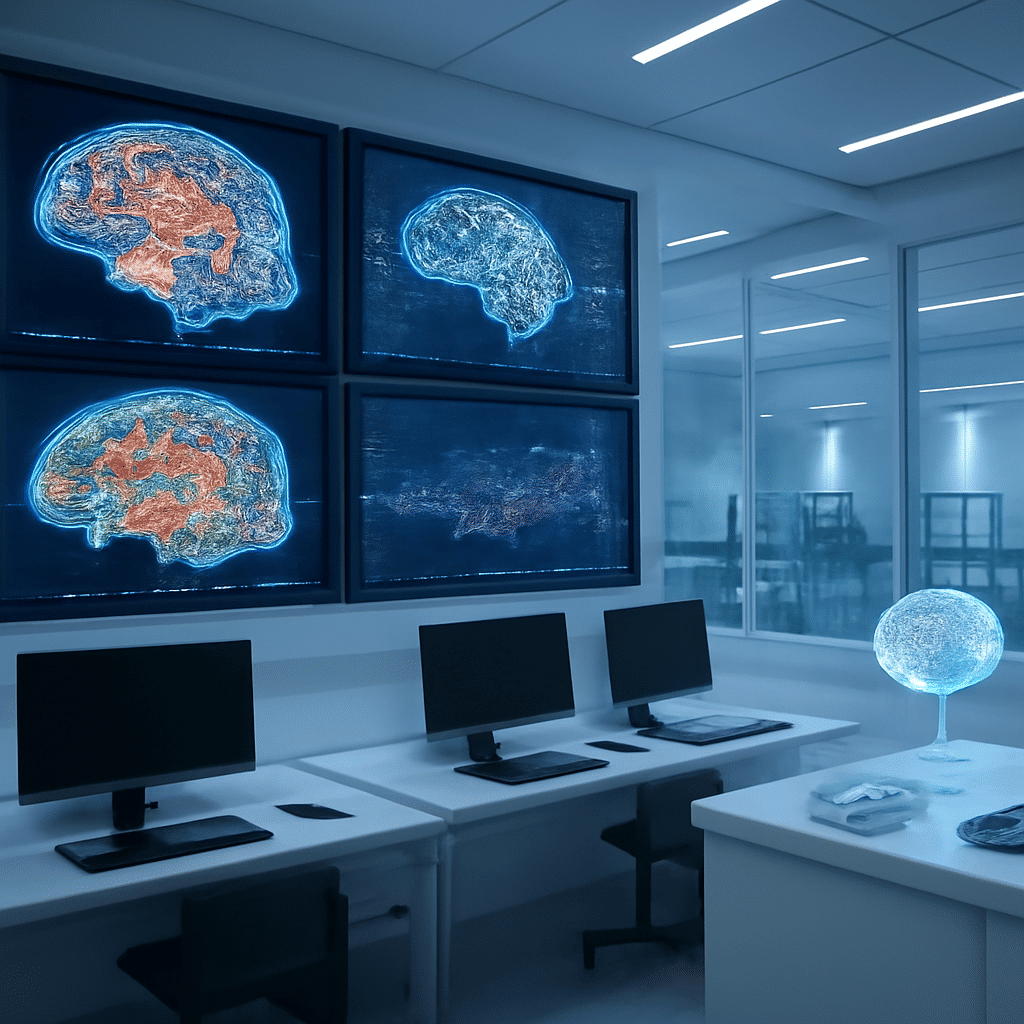
Artificial intelligence (AI) is revolutionizing numerous fields, and neuroscience is no exception. By leveraging AI, researchers in neuroscience are breaking new ground in understanding the complex architecture and functions of the human brain. This integration of AI into neuroscience is not only accelerating research but also unlocking previously unattainable potentials.
One of the most significant impacts of AI in neuroscience research is in data analysis. Neuroscientific studies often involve tremendous amounts of data from various sources, including brain imaging, electrophysiological recordings, and genetic sequencing. Traditionally, analyzing these massive datasets has been time-consuming and labor-intensive. However, AI, particularly machine learning algorithms, can process and analyze complex data at an unprecedented speed. These algorithms can detect patterns and correlations that may be overlooked by human researchers, thus paving the way for new insights into brain functions and disorders.
AI also facilitates the development of advanced brain-computer interfaces (BCIs). BCIs enable direct communication between the brain and external devices, offering promising applications for individuals with severe disabilities. AI algorithms enhance the accuracy and efficiency of BCIs by improving signal interpretation from neural activity. This advancement holds considerable potential for restoring independence to individuals with paralysis or neurodegenerative diseases by enabling them to control prosthetic limbs or communicate through thought.
Furthermore, AI plays a pivotal role in modeling brain function. Computational models of the brain, powered by AI, support researchers in simulating neural activities and understanding complex brain dynamics. These models are instrumental in hypothesizing how different brain areas interact and in exploring how alterations in neural circuits can lead to cognitive dysfunctions. In this capacity, AI serves as a powerful tool for probing the depths of human cognition and illuminating the underlying mechanisms of neurological diseases like Alzheimer's and Parkinson's.
AI also boosts personalized medicine in neurology by predicting disease progression and tailoring treatments to individual patients. Machine learning models can analyze a patient’s data to forecast the progression of neurological disorders and predict responses to various treatments. Personalized therapies can then be designed to slow the disease's progression and improve patients' quality of life. This level of precision medicine is likely to revolutionize how neurological conditions are diagnosed and treated.
Beyond research, AI contributes to neuroscience education. AI-powered tools and educational platforms offer interactive learning experiences that make complex neuroscientific concepts accessible to students and professionals alike. These platforms often include simulations, virtual labs, and adaptive learning technologies, enhancing the teaching and understanding of neuroscience through engaging and personalized educational experiences.
Despite its promising contributions, the use of AI in neuroscience also presents challenges. Ethical concerns arise regarding data privacy and the potential biases embedded in AI models. Ensuring that AI technologies are developed and applied responsibly is crucial for maintaining public trust and fostering an inclusive scientific environment. Moreover, interdisciplinary collaborations between AI experts and neuroscientists are essential to overcome these challenges and fully exploit AI's potential in neuroscience.
In conclusion, AI is a transformative force in neuroscience, catalyzing advances in data analysis, brain modeling, personalized medicine, and educational methods. Its impact extends beyond accelerating research; AI holds the promise of unveiling new dimensions of brain science and enhancing the lives of individuals with neurological conditions. As the synergy between AI and neuroscience continues to evolve, it will undoubtedly lead to groundbreaking discoveries and innovations in understanding the human brain.